
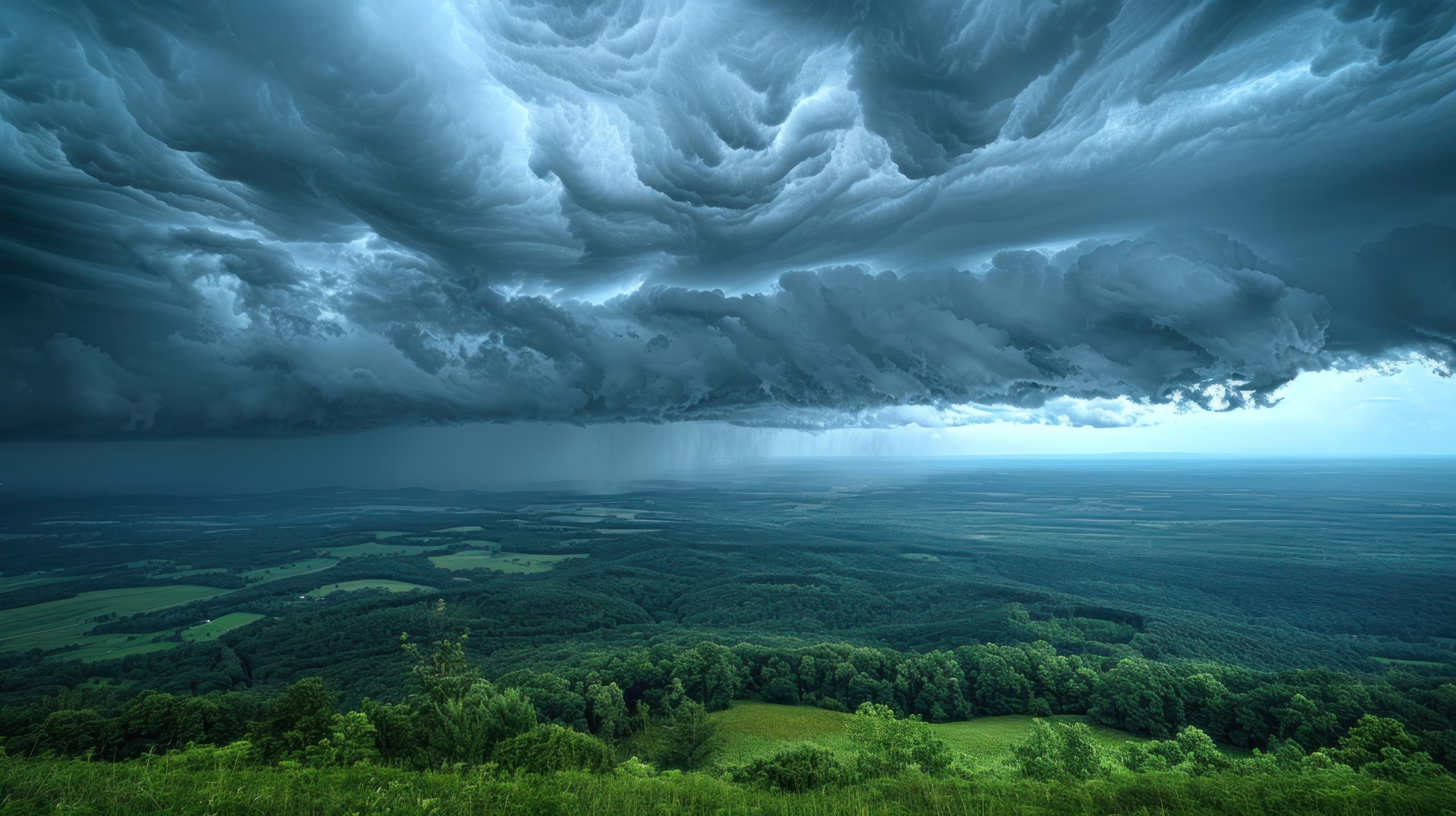
Modular buildings are built to perform in the real world—on job sites, remote locations, industrial facilities, and outdoor environments where weather is not a “maybe,” it’s a constant.
And while most people think of weather protection as simply “keeping water out,” extreme conditions demand more than that. Long-term performance depends on a few key factors working together:
- how the structure sheds water
- how the roofline protects vulnerable areas
- how wind forces interact with the building and attachments
- how seams and transitions resist infiltration
- how the building holds up through seasons of exposure
In this article, we’ll walk through the weather realities that impact modular buildings the most—and the practical strategies that help protect the building envelope year after year.
Why Extreme Weather Design Isn’t Just for “Extreme” Locations
It’s easy to assume you only need extra weather protection in hurricane zones or snowy regions.
But most weather-related building issues come from normal exposure patterns that happen everywhere:
- repeated wind-driven rain events
- standing water after storms
- seasonal expansion and contraction
- freeze/thaw cycles around joints
- sun exposure and heat cycling
- high gust loads during storms
A modular building designed for durability doesn’t just survive one storm—it performs reliably through years of seasonal change.
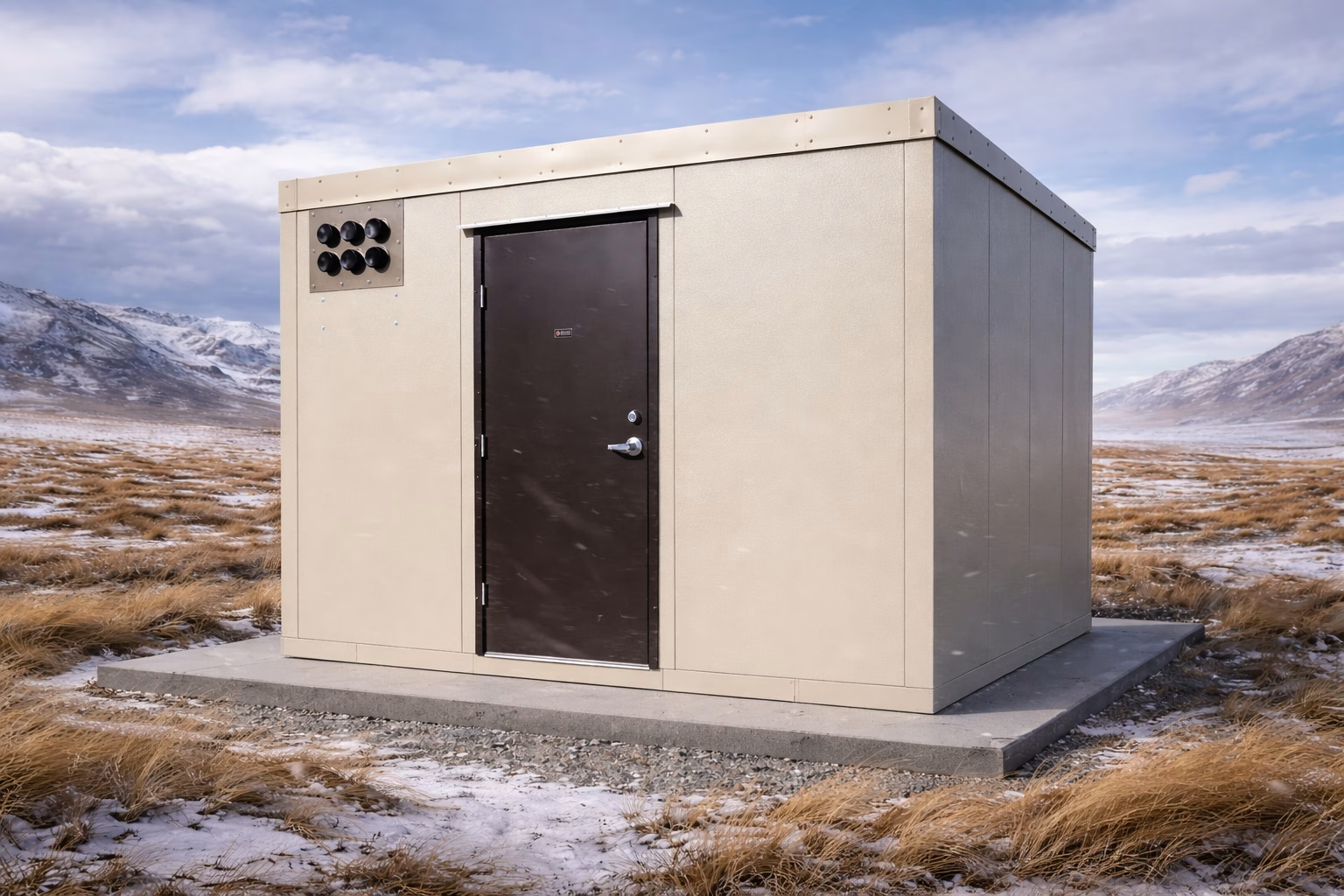
Wind: The Force People Underestimate
Wind doesn’t just push against a building—it creates pressure changes, lift forces, and stress points that show up most at:
- corners
- roof edges
- door areas
- building attachments (canopies, add-ons, penetrations)
What wind often causes over time:
- movement at seams and joints
- loosening hardware on exterior accessories
- infiltration where seal points fatigue
- wear on roof transitions and edges
Wind matters even in areas that aren’t “wind zones,” because stress accumulates over years.
Why Wind-Driven Rain Is the Real Threat
Rain falling straight down is rarely the problem.
The bigger issue is rain pushed sideways by wind—because it finds weaknesses:
• door edges
• corner transitions
• roof seams
• poorly protected penetrations
• areas where runoff pools or splashes
Wind-driven rain exposes the difference between a building that’s merely closed… and a building that’s weather-protected as a system.
Roof Strategy: Where Most Weather Protection Is Won or Lost
The roof is the first line of defense. A good roof strategy isn’t just “waterproof.” It’s designed to manage real exposure.
The best roof strategies focus on:
✅ shedding water efficiently
✅ controlling runoff so it doesn’t feed into seams
✅ protecting transitions at roof-to-wall points
✅ resisting uplift and edge stress in wind events
✅ minimizing standing water risk
Water management and roof edge protection are two of the biggest durability factors in outdoor building performance.
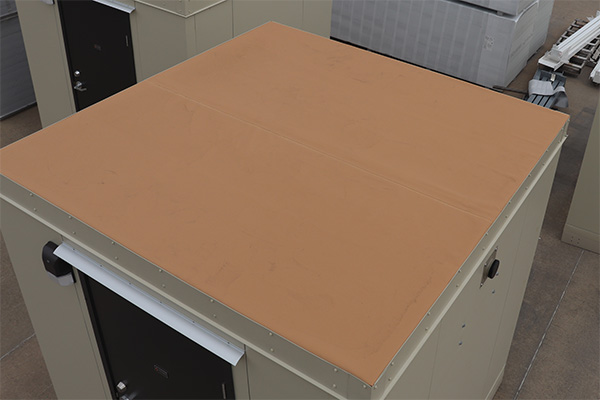
Rain Roof Concepts: Why Coverage and Overhang Matter
Rain roofs and protective overhang strategies are popular for a reason: they protect the most vulnerable areas of a building envelope over time.
Rain roofs can help reduce:
- direct water impact on seams and panels
- runoff streaking down door frames and entry points
- long-term exposure at roof edges
- water intrusion risk during storms
Even when a building is sealed properly, reducing the amount of weather stress it experiences improves longevity and reduces maintenance risk.
Drainage Planning: The Real-World Difference Maker
Many long-term weather problems happen because water collects near the base of the building or around vulnerable edges.
Drainage problems can cause:
- pooling water at the foundation line
- splashback toward lower panels
- moisture accumulation around entry points
- increased corrosion risk in some site environments
A modular building performs best when the site is planned so water moves away from the structure.
Even the best building envelope struggles if it sits in standing water repeatedly.
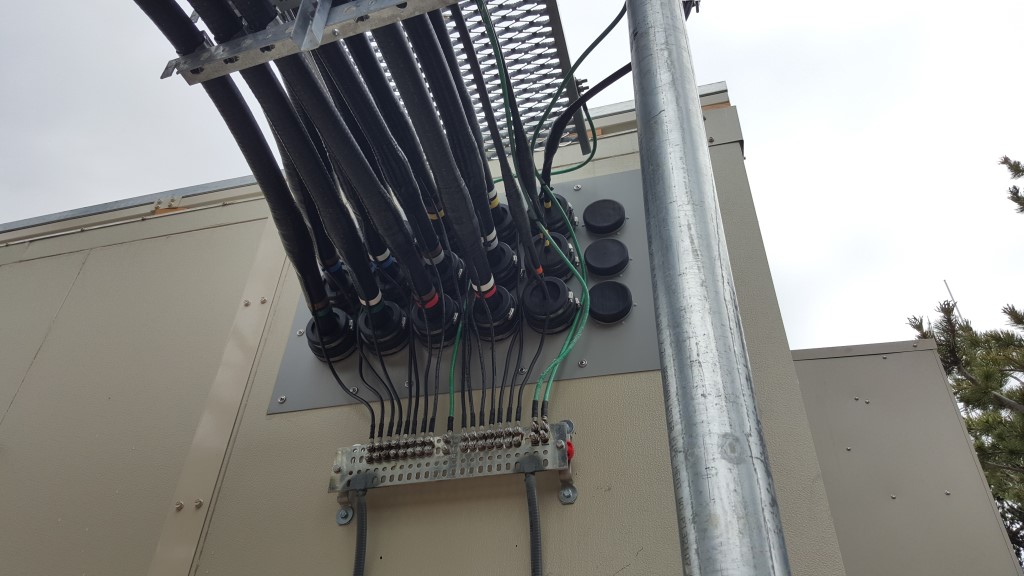
Door and Penetration Protection in Bad Weather
Doors and penetrations are common vulnerability points because they interrupt the envelope.
Weather-focused planning should consider:
- door orientation (what side faces prevailing wind/rain)
- sealing strategy at the threshold
- protection of cable entry zones
- minimizing exposure to splash and runoff
- controlled pathways for utilities
Reducing direct exposure to wind-driven rain at these points is one of the easiest ways to improve long-term performance.
Final Takeaway: Weather Protection Is a System, Not a Single Feature
Extreme weather performance isn’t about one upgrade—it’s about building design working together:
✅ roof strategy and runoff control
✅ seam and transition protection
✅ wind resistance at edges and corners
✅ drainage planning around the base
✅ protected penetrations and door orientation
At Enviro Buildings, we design modular structures to hold up under real-world exposure conditions—so customers get long-term durability, fewer weather-related issues, and reliable performance throughout the seasons.