
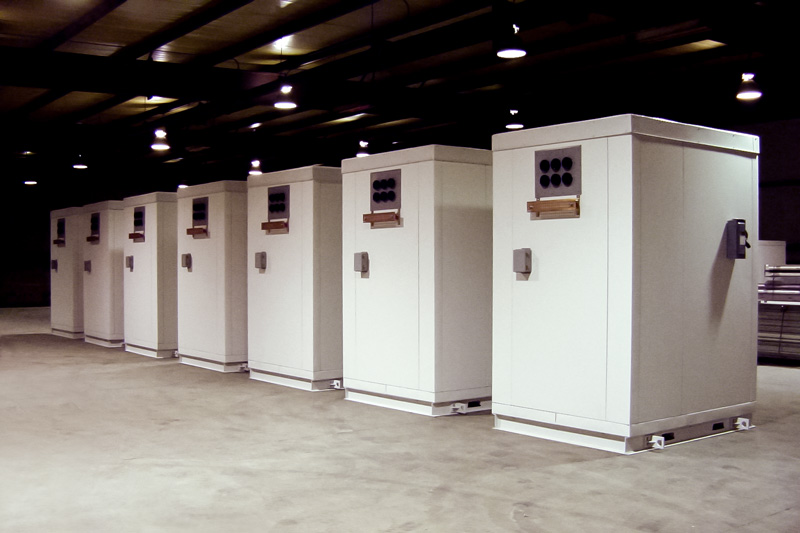
One of the most important decisions in a modular building project happens before the building even arrives on site:
How will it be mounted and supported?
It’s easy to focus on interior layout, doors, and equipment requirements, but the foundation strategy affects everything:
- site prep cost and timeline
- drainage and moisture management
- long-term stability
- service access
- relocation flexibility
- how quickly you can deploy
At Enviro Buildings, we see three common installation approaches for modular and panel-built structures:
- slab / concrete pad installations
- skid-mounted installations
- elevated base installations
Each has advantages, and the “best” option depends on your site, your use case, and your long-term plan.
Here’s how to compare them.
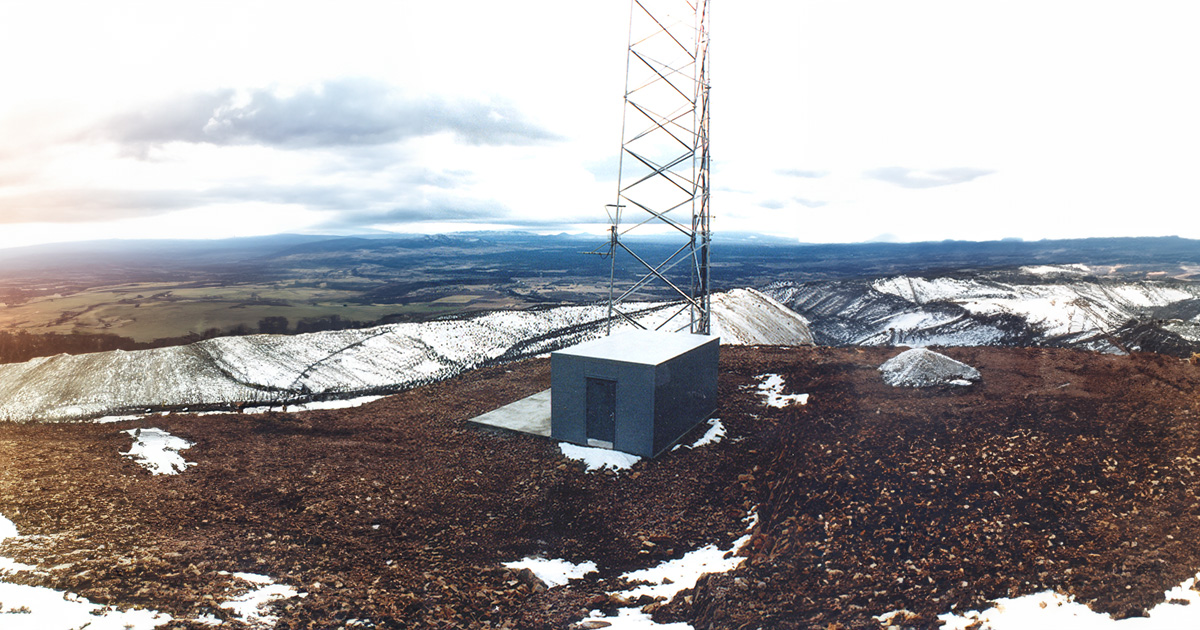
Option 1: Slab or Concrete Pad Installation
A slab foundation is one of the most common mounting methods because it’s stable, permanent, and widely understood across construction teams.
Best for:
- permanent installations
- long-term facilities
- high-traffic service access
- heavy equipment loads
- locations requiring rigid support
Advantages:
✅ strong long-term durability
✅ stable, level support across the footprint
✅ great for frequent equipment service access
✅ predictable construction approach
✅ supports heavy equipment without flex
Considerations:
A slab requires site prep and time. That may include:
- excavation and grading
- forming and pouring concrete
- curing time before install
- local permitting considerations
Slabs are ideal when the installation is permanent and longevity is the priority.
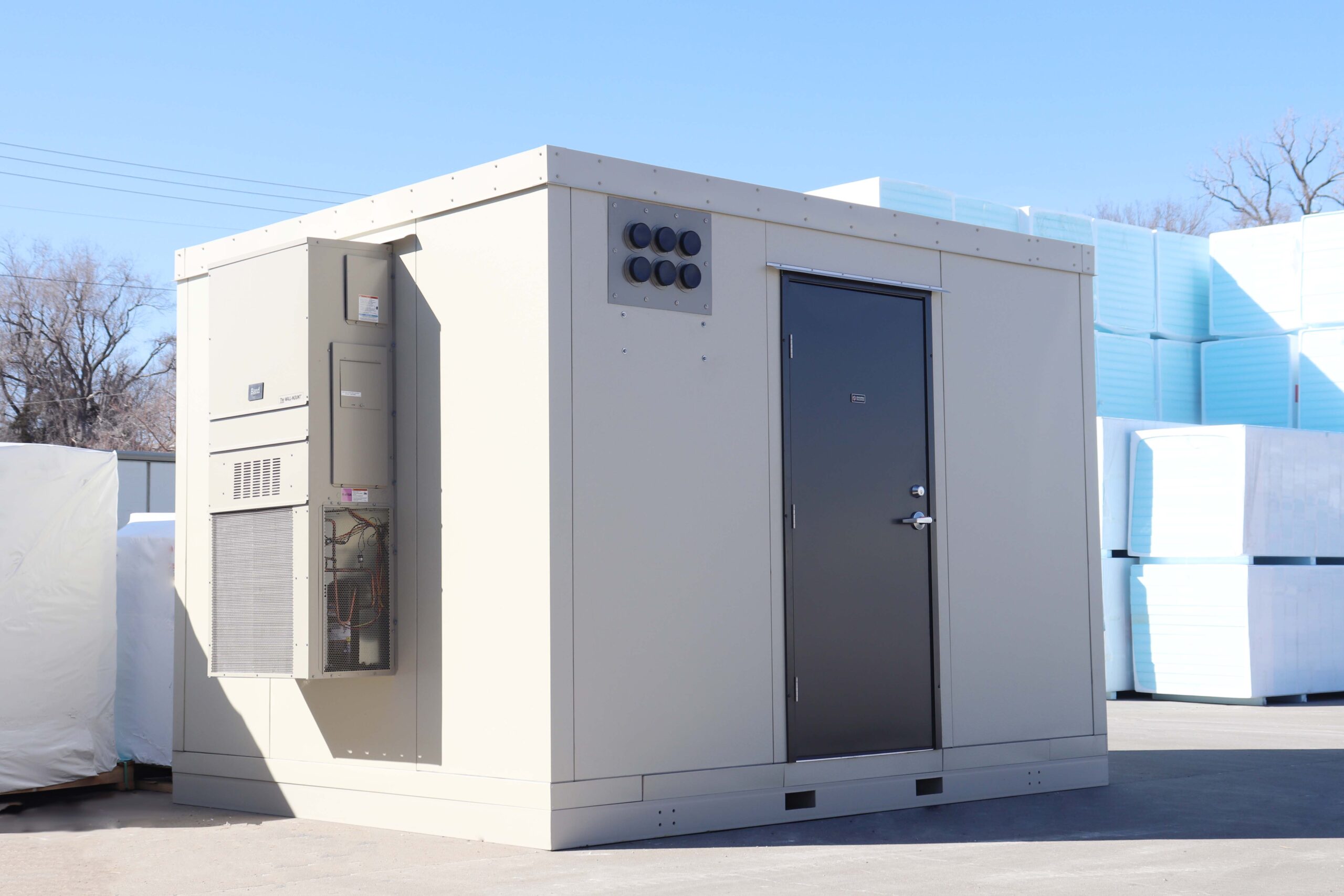
Option 2: Skid-Mounted Installation
Skid mounting is a strong option for projects where mobility, speed of deployment, and flexibility matter.
The building is mounted on structural skids designed for loading, moving, and placing onto prepared supports.
Best for:
- remote sites
- quick deployment projects
- facilities that may relocate in the future
- temporary or phased installations
- applications where crane placement is preferred
Advantages:
✅ faster deployment with less permanent site work
✅ easier to relocate or reposition
✅ supports transport-friendly installation logistics
✅ flexible option when slab work isn’t practical
Considerations:
Skid installs still need proper site preparation:
- level support points
- stable ground conditions
- drainage planning under the skid
- access for equipment placement
Skids are not “no prep”—they’re “less permanent” and often faster.
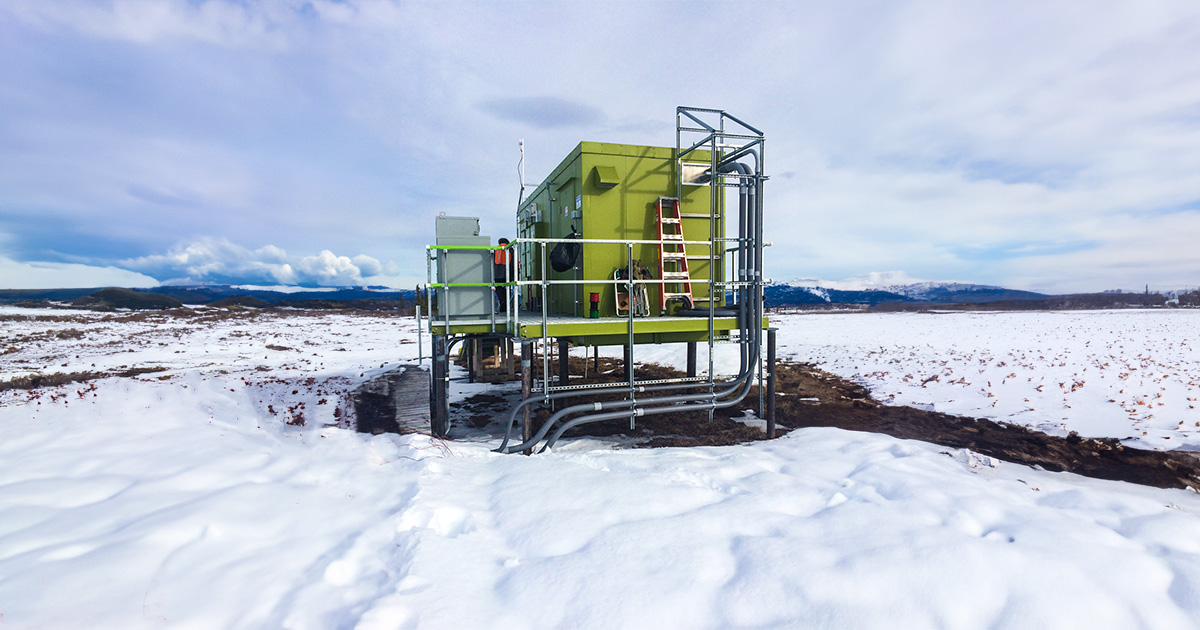
Option 3: Elevated Base Installation
An elevated installation lifts the building above grade. This approach is common in environments where drainage, flooding risk, snow, or site conditions make ground-level installs less ideal.
Best for:
• flood-prone sites
• areas with heavy rainfall and standing water risk
• locations with snow management concerns
• drainage-sensitive applications
• sites needing clearance for utilities or airflow
Advantages:
✅ better drainage control
✅ reduced risk of water intrusion at ground level
✅ improved access for utility routing
✅ helps prevent pooling water around the structure
✅ can improve durability in harsh environments
Considerations:
Elevated bases require careful planning for:
• structural support and anchoring
• safe access (steps/ramps if needed)
• load distribution
• long-term stability in wind conditions
Elevated installs are often the best choice for harsh environments, but they require intentional design.
How to Choose the Best Foundation Option
Here are the practical decision factors that usually determine the best approach.
1) Is the Building Permanent or Relocatable?
If the building may be moved later, skid mounting is often a smart choice.
If it’s permanent and long-term, slab is usually best.
2) What Are the Site Conditions?
If the site has:
- uneven terrain
- drainage issues
- unstable soil
- standing water risk
…then elevated base or skid solutions may be better than a traditional slab approach.
3) What Equipment Loads Will Be Inside?
Heavier equipment loads may favor slab support or engineered elevated bases designed for high load distribution.
4) What’s the Desired Speed of Deployment?
If timeline is critical, skid-mounted and some elevated solutions can reduce site work and allow faster installation—especially in remote or time-sensitive projects.
5) What Does Service Access Look Like?
Think about:
- how often equipment will be accessed
- whether carts or tools need smooth entry
- door thresholds and entry paths
- clearance around the building for maintenance
A stable, accessible foundation supports easier long-term service and operation.
Final Takeaway: Foundation Strategy Determines Long-Term Success
The best modular building designs account for the foundation plan early, because mounting impacts:
✅ project timeline
✅ cost and site prep effort
✅ long-term durability
✅ moisture and drainage performance
✅ flexibility and relocation potential
At Enviro Buildings, we help customers choose mounting strategies that match real-world site conditions and long-term needs—so the building performs reliably from day one.