

A modular building project can move fast—sometimes impressively fast.
But there’s one thing that can stop a smooth deployment instantly:
The site isn’t ready when the building arrives.
When site prep is incomplete, delivery day turns into delays, rework, extra cost, and scheduling headaches. And the worst part is that most of those problems are avoidable with a straightforward checklist.
Whether your modular building is being installed as an equipment shelter, industrial enclosure, storage structure, or general-use facility space, the success of the install depends on what happens before it arrives.
In this article, we’ll walk through a practical site prep checklist that helps prevent delivery-day surprises and sets your installation up for a smooth, on-time deployment.

Why Site Prep Matters More Than People Expect
Modular buildings are designed to install efficiently once the site is ready.
But “site ready” means more than just cleared ground.
It includes:
- foundation or base readiness
- utilities planning
- access paths for trucks and cranes
- safe placement clearance
- drainage and long-term stability planning
- anchoring requirements, if needed
Even small issues—like a gate that’s too narrow or a pad that’s not level—can delay the entire project.
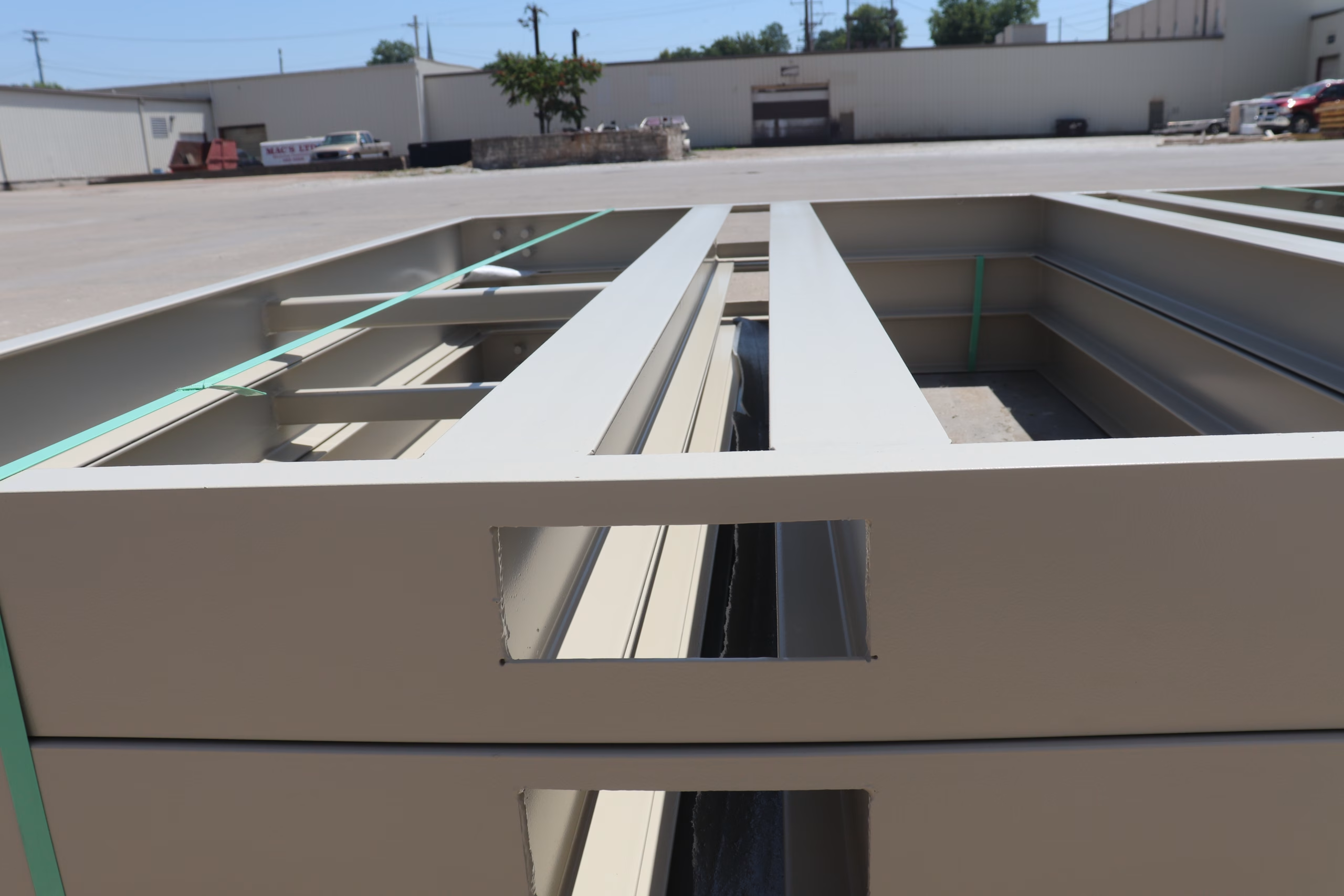
1) Confirm Foundation Strategy: Slab, Skid, or Elevated Base
Before anything arrives, the foundation approach must be finalized and completed.
Common foundation styles include:
- concrete slab / pad
- skid-mounted placement on supports
- elevated base installation in drainage or flood-prone areas
What to confirm:
✅ base dimensions match the building footprint
✅ support points are correct and stable
✅ elevation and height match the project plan
✅ the foundation is level and within acceptable tolerance
✅ base access allows proper placement and anchoring
A foundation that’s slightly out of level can create long-term problems and complicate installation.

2) Verify Load-Bearing Capacity and Soil Conditions
Some sites look ready but aren’t stable under load.
If the ground can’t support the weight of the building and installation equipment, you risk:
- settlement over time
- shifting that impacts doors and alignment
- long-term durability issues
- safety problems during install
What to confirm:
✅ soil stability and compaction plan
✅ pad design matched to building load
✅ no soft areas or standing water under the placement zone
✅ long-term drainage avoids water pooling near the base


3) Confirm Drainage Around the Building Location
Drainage is a long-term performance factor, not just a cosmetic concern.
If water pools around the building after storms, you increase the risk of:
- long-term moisture exposure at the base
- splashback onto lower panels
- access hazards during service
- corrosion and wear risks over time
What to confirm:
✅ water flows away from the building footprint
✅ no low spots that collect water
✅ the surrounding grade supports runoff control
✅ snow or heavy rain patterns won’t trap the building in standing water
A modular building lasts longer when it’s installed on a site that stays dry.

4) Check Delivery Access: Can the Truck Actually Reach the Site?
Delivery access is one of the most common install-day surprises.
A building may be ready—but if the truck can’t reach the placement area, installation becomes complicated quickly.
Confirm access for:
✅ road approach and turning radius
✅ gate width and clearance
✅ overhead obstructions (trees, lines, canopies)
✅ ground stability for truck travel
✅ backup and staging space near the placement area
Access planning is especially critical at tight industrial sites and remote locations.

5) Confirm Placement Clearance: Space for Crane or Equipment
Even if you’re not using a crane, you need room to place the building safely.
Confirm:
✅ adequate space around the footprint for placement equipment
✅ clearance for lifting and setting
✅ no overhead lines or obstacles
✅ safe space for crew movement
✅ staging area for hardware and tools
A building can’t be placed safely if the site is too tight to maneuver equipment.

6) Verify Utility Routing Plans Before the Building Arrives
Utility planning should be ready before delivery day—not figured out afterward.
That includes:
- power
- data and telecom routing
- grounding
- conduit paths
- equipment connection plans
Confirm:
✅ where utilities will enter the building
✅ trenching and routing paths are prepared
✅ conduits align with entry points
✅ cable and penetration sealing strategy is planned
✅ future expansion capacity is considered
Utility planning done early reduces envelope penetrations and produces a cleaner, more reliable install.

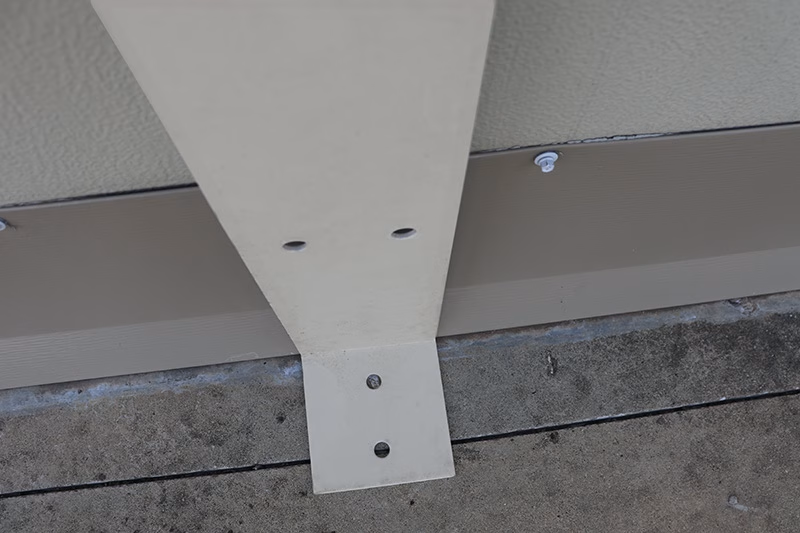
7) Confirm Anchoring Requirements and Hardware Readiness
Some installations require anchoring depending on:
- wind exposure
- site conditions
- code requirements
- structural strategy
If anchoring is required, confirm:
✅ anchor locations are planned and accessible
✅ hardware is ready on-site
✅ install crew knows the anchoring plan
✅ foundation supports the anchoring requirements
Anchoring isn’t something you want to improvise after the building is already placed.
8) Plan for Safe Access and Working Conditions
Delivery day success also depends on safety readiness.
Confirm:
✅ stable walking paths around the building
✅ safe staging area for tools
✅ lighting as needed for early/late work
✅ clear crew access to placement zones
✅ site hazard controls in place
A safe install environment reduces risk and speeds completion.
Final Takeaway: Site Prep Is What Makes Modular Deployment Smooth
A modular building can arrive ready to work—but only if the site is ready to receive it.
A strong site prep checklist prevents:
- delivery-day delays
- placement challenges
- utility routing surprises
- long-term drainage problems
- rework and cost overruns
If you want a smooth modular installation, confirm:
✅ foundation readiness
✅ stable ground support
✅ drainage planning
✅ truck and crane access
✅ utility routing preparation
✅ anchoring requirements
✅ safe working conditions
At Enviro Buildings, we help customers plan site prep the right way so installation day goes smoothly and the building performs reliably from day one.